
Composting update
We have a few different composting processes here. Composting seems to be a bit of a religion. This is what we do. You can do it differently if you want.
Compost bins.
We have a lot of basic compost bins. I usually park them on a garden bed for a year of two, then move them onto a different bed. Over the two years a lot of nutrition seeps down into the bed. Last year I acquired a lot of heavy cardboard tubes and have used them as compost bins. Its sort of worked, but the tubes slowly deteriorate, which if fine, its just cardboard. But now when its time to empty the tubes and move them, they tend to completely collapse and unravel as I try and work with them. Its all a bit of a mess, and I probably won't repeat the exercise.
The more traditional solar-safe plastic green compost bins have been good for us. Most of them came with us from Melbourne more than 10 years ago, and they were veterans then.
Last summer though the bins got colonized by rats, then a snake or two. I've decided I am not going to have the composting process in the vegie garden near the house and will slowly move the bins away.
That'll be ok. We have plenty of paddock space where we are trying to repair mining damage, so drip-feeding nutrition into stony locations as a way of inspiring some soil health regeneration will suit me.
I'm going to set up some inground composting spots in the garden beds with a secure lid to deal with day-to-day kitchen scraps, but the larger wholesale material that fills the big compost bins, like trailer loads of weeds, will have to be hauled out to the paddock.
Compost heaps
We have one or two of these going most of the time. Its been pointed out to me that its pretty unsightly, a ramshackle construction made out of disintegrating pallets that you look at as you drive down the long road to the house. So this latest one has been set up in a gully and you can't see it.
The big heaps are great for a sudden surplus of green waste.
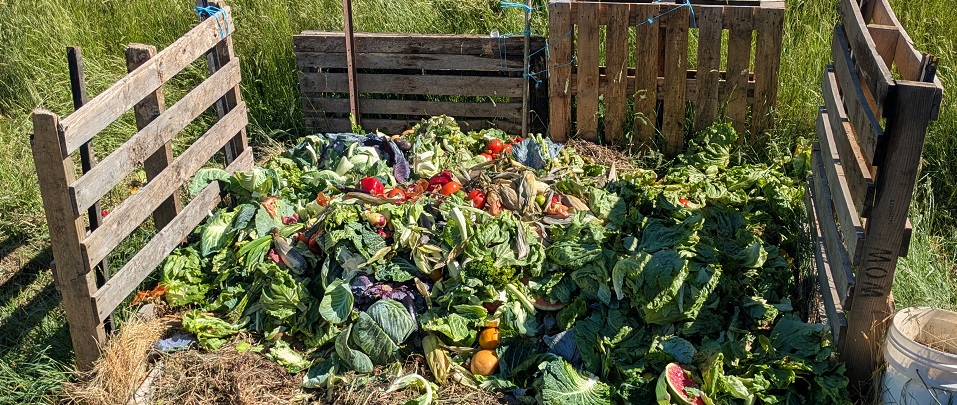
This pile in the last few days has received four wheelie bins of supermarket green waste/written off fruit and vegetables.
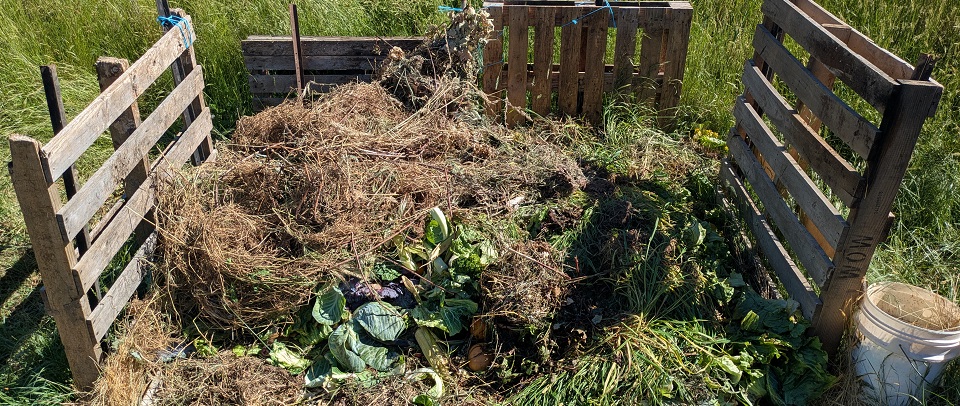
On top of that went a trailer of grassy weeds pulled from vegie garden beds
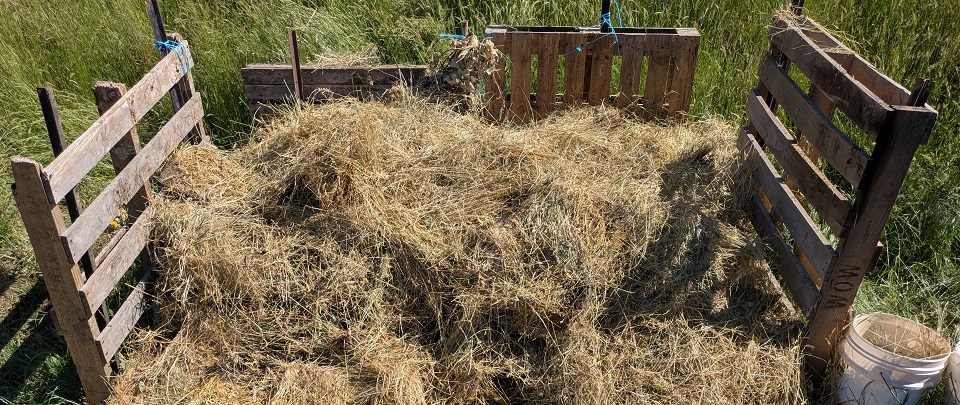
That then got covered by a hay bale that had gat wet and rotted in the centre edge. Not suitable for livestock but great brown compost material. On top of that went 15 x 20 litre buckets of horse manure.
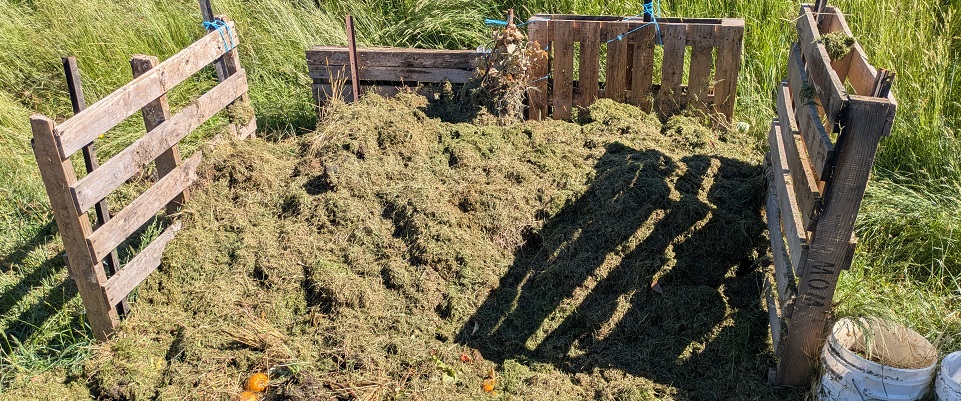
And yesterday I collected five wheelie bins of grass clippings and spread it over the top of the pile.
Its raining today which will help bed it all down.
The advantage of this is that its an easy way to manage large volumes. Its easy to back a trailer to the pile and tip off a wheelie bin. To get the contents of a wheelie bin into a compost bin I have to manually fork it from receptacle to receptacle. All do-able, but its more work.
My crime with both these processes is I don't do much in the way of turning the compost. I pack it in layers and leave it, refilling/topping up for about a year, then just leaving it alone for months. Eventually I get around to digging it all out. Usually most of it is good, crumbly material and I use it in our garden beds. Sometimes it hasn't worked that well....a dry patch of straw that hasn't decomposed, a putrid soft spot of, say, too much watermelon. That stuff gets turned and moved into the next compost bin. Its not fast, but for me its less work.
I could also include some aeration tubes into the pile so air can get into the middle. I have done it, but most the time I can't be bothered.
Onsite composting
Its not really composting as such, but I do a LOT of reprocessing of green waste as a way if refurbishing damaged paddocks. Rather than building a compost heap I am filling holes and craters with compostable material. As it degrades it reduces in volume, so although I might fill a huge hole with, say, 4 x 250 litre supermarket wheelie bins of green waste, in three months time the hole will be back again, needing more fill. But, over time, the soil in that hole becomes quite rich and eventually a hot spot of luxuriant grass growth.
I also am slowly covering degraded areas with compostable material with the aim of providing a soil cover of 5-10 centimetres. That works will with autumn leaves, woodchip and grass clippings. The tricky bit is each of those elements come at different times of the year so you can't make finessed layers. Its slow going, and in most cases needs soil included in the added cover. That is, the leaf litter/grass/woodchip cover isn't enough. Or rather, I am too impatient to wait for the five years needed! If I spread soil over the top of the organic matter I get a faster, more obvious recover/regeneration. ( Where I did do this originally, some five years ago, long enough for the litter to turn into soil, it has been impressively successful. I just don't have that much time to wait!)